
The Owner's Playbook™
A working plan for the business you want to own.
Build toward the freedom of time and money, whether you scale, step back or sell. Your Owner’s Playbook puts the iBD Ownership Operating System to work in your company: one working collection of your goals, numbers, leadership responsibilities and review tools.

How the Ownership OS works
Build your Playbook. Use it. Keep it current.
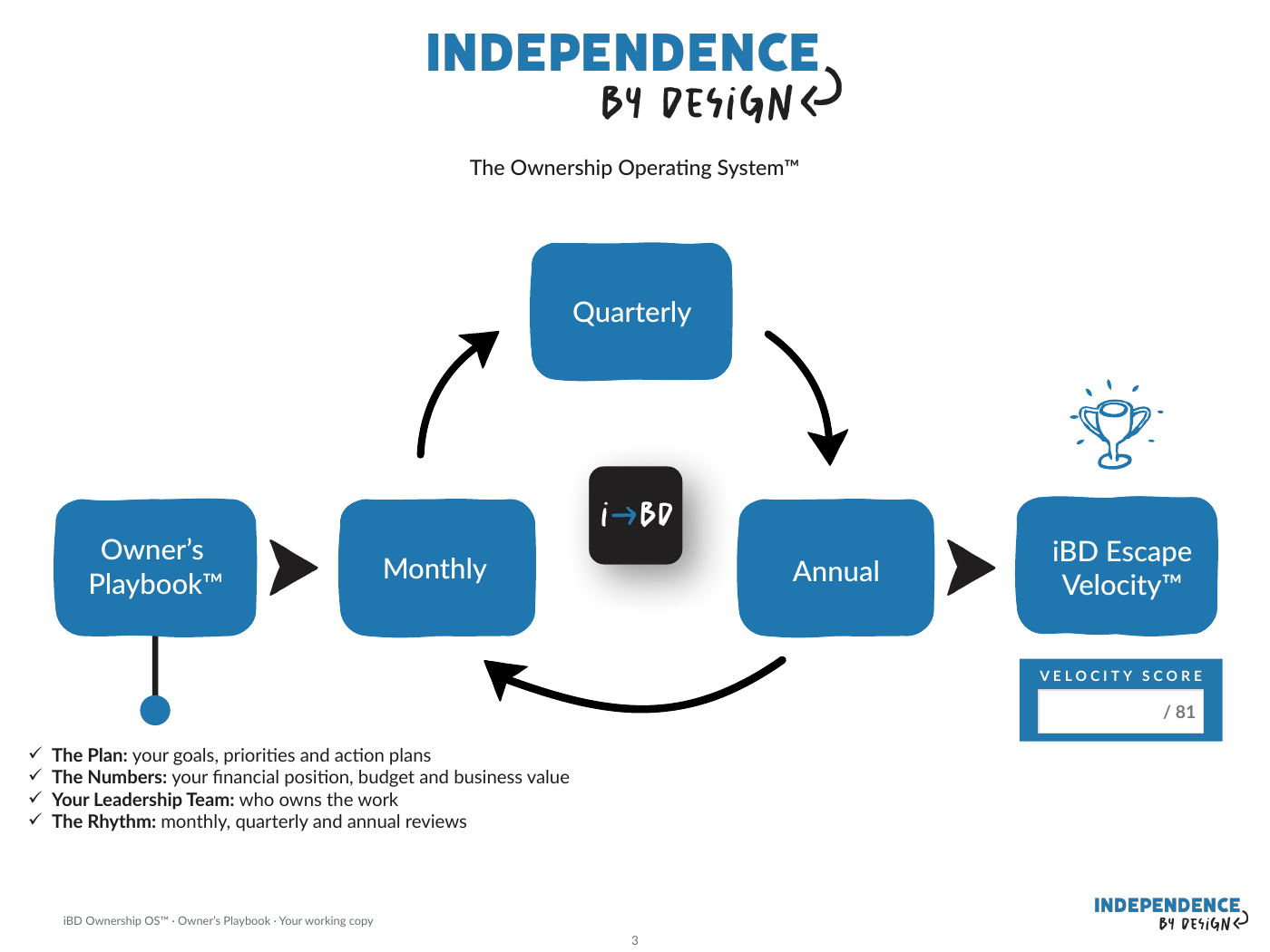
The iBD Ownership OS™ aligns your business operations with your ownership goals. Your Assessment and Roadmap show where to focus. The Blueprint helps you build the Playbook that holds your plan. Monthly, quarterly and annual reviews keep that plan connected to actual results and your next decisions.
Put it into practice ↓
Review results, make decisions and choose the next work.
Work toward independence ↓
Compare your results with the life you want ownership to support.
What this means for you
Say you want to work fewer hours.
Hiring a leader could help. Before you decide, you need to know which responsibilities that person would take, what the role would cost and what that cost means for the money you take home.
Your Playbook brings those questions together. It connects the goal, financial forecast and leadership plan so you can make the trade-off deliberately and review what happens afterward.
Use your Playbook to work through the decision.
Your time. Which decisions and responsibilities will move off your plate?
Your cash flow. Can the business fund the role while supporting the distributions you need?
Your wealth. How could a business that depends less on you support its long-term value?
The same approach applies when you consider investing in growth, changing compensation, taking distributions or planning a future transition.
Inside your Playbook
Four parts connect your goals to the work.
These selected pages show the four parts of your Playbook. Fill them with your company's answers, supported by financial files, written plans and meeting records. Your printed pages and private working files refer to the same plan.
01 / The Plan
What do you want your business to make possible?
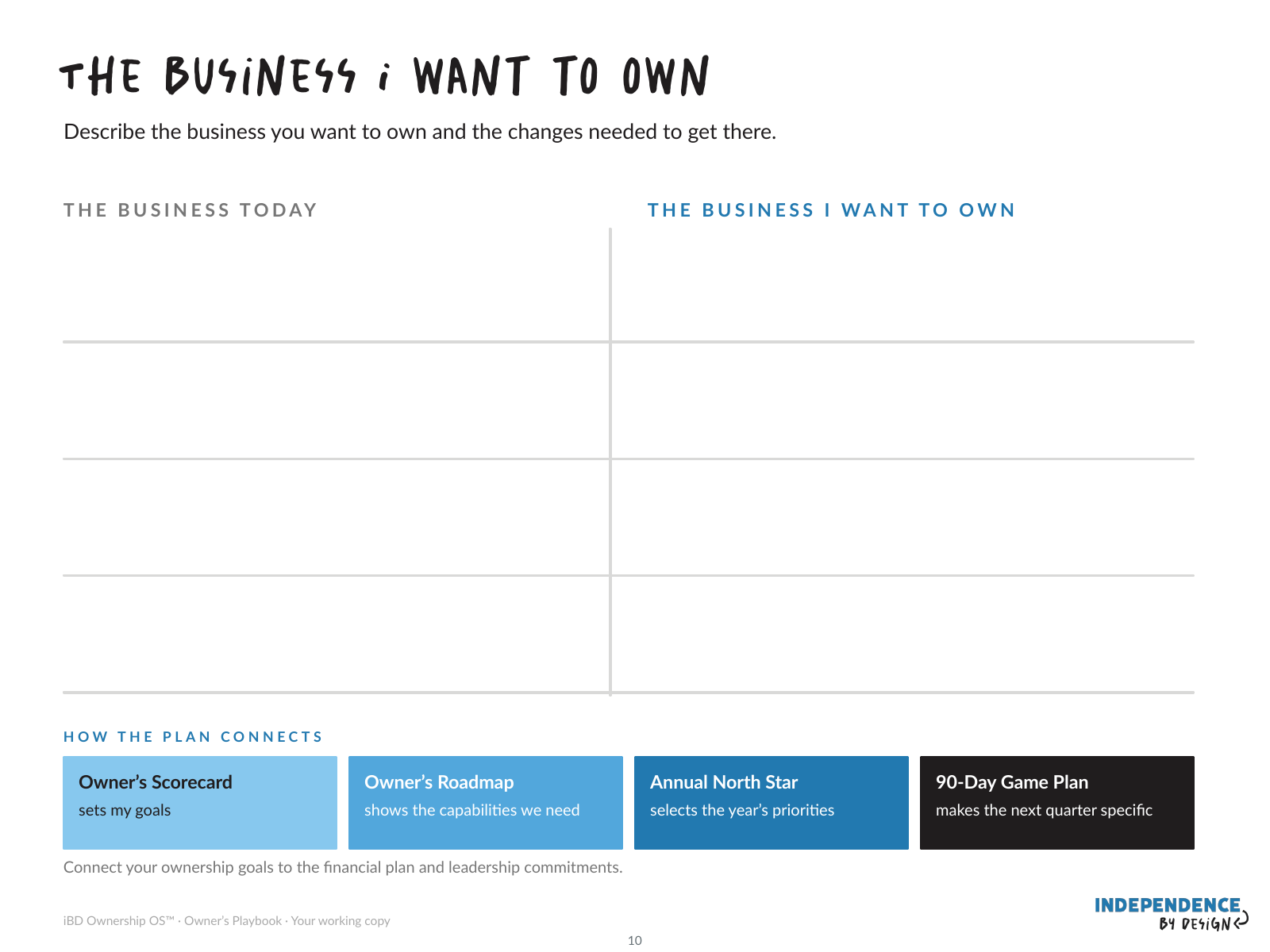
Write down what you want from ownership, where your business stands today and what must change. This gives you a reason for choosing one priority over another.
Your Owner's Scorecard records your five-year goals. The Roadmap holds your milestone scores and next priority. Your written Value Growth Plan explains how the business needs to change, with annual and quarterly plans for doing the work.
02 / The Numbers
Can the business fund the plan?
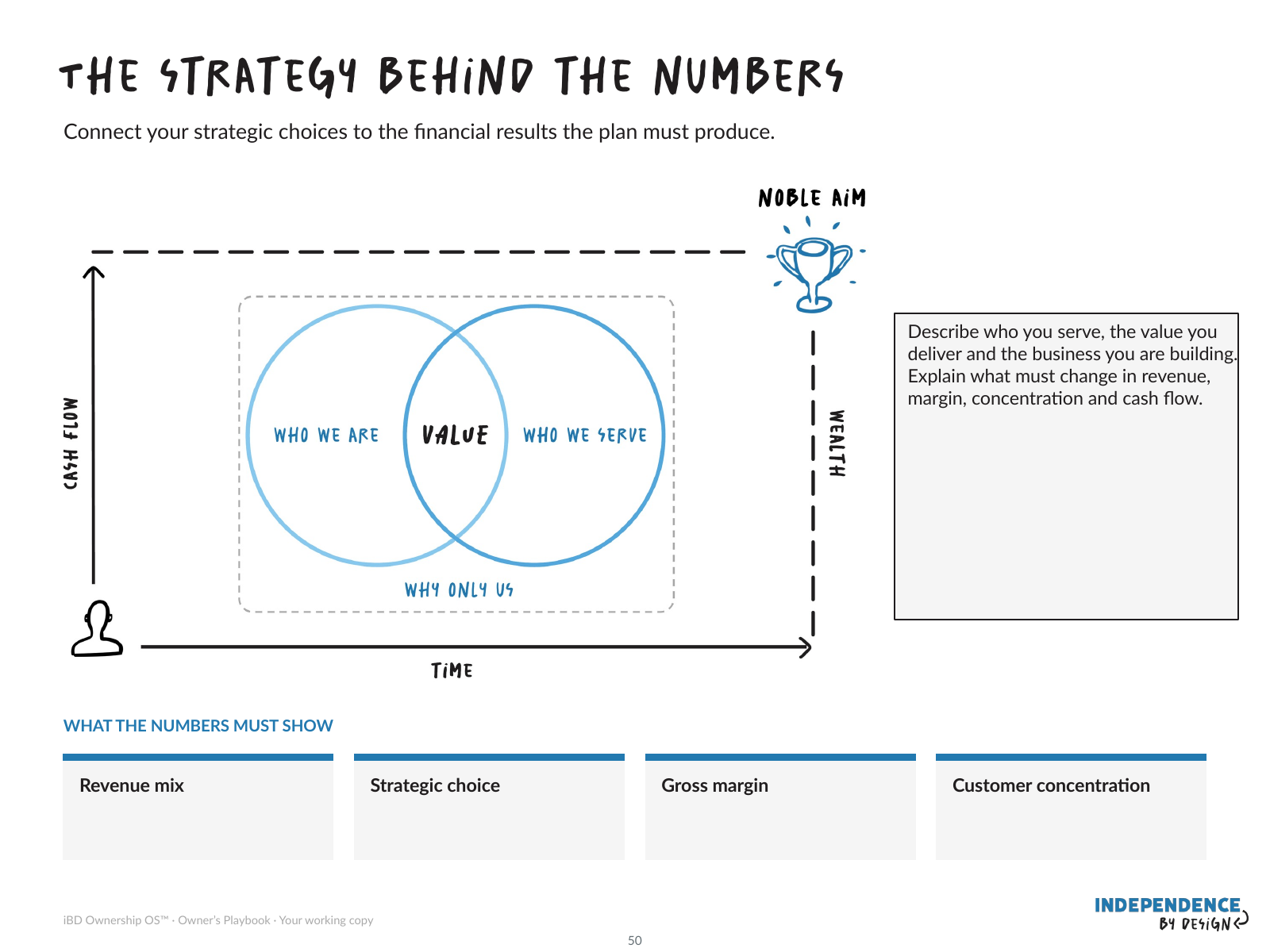
Connect what you want to what your company earns, needs to reinvest and can distribute. Your current financial picture, budget, forecast and valuation help you compare choices before committing to them.
The three-statement model connects profit, the balance sheet and cash flow. You can see how a hire, a growth investment or a distribution affects the rest of the plan.
03 / Your Leadership Team
Who will do the work, and what still depends on you?
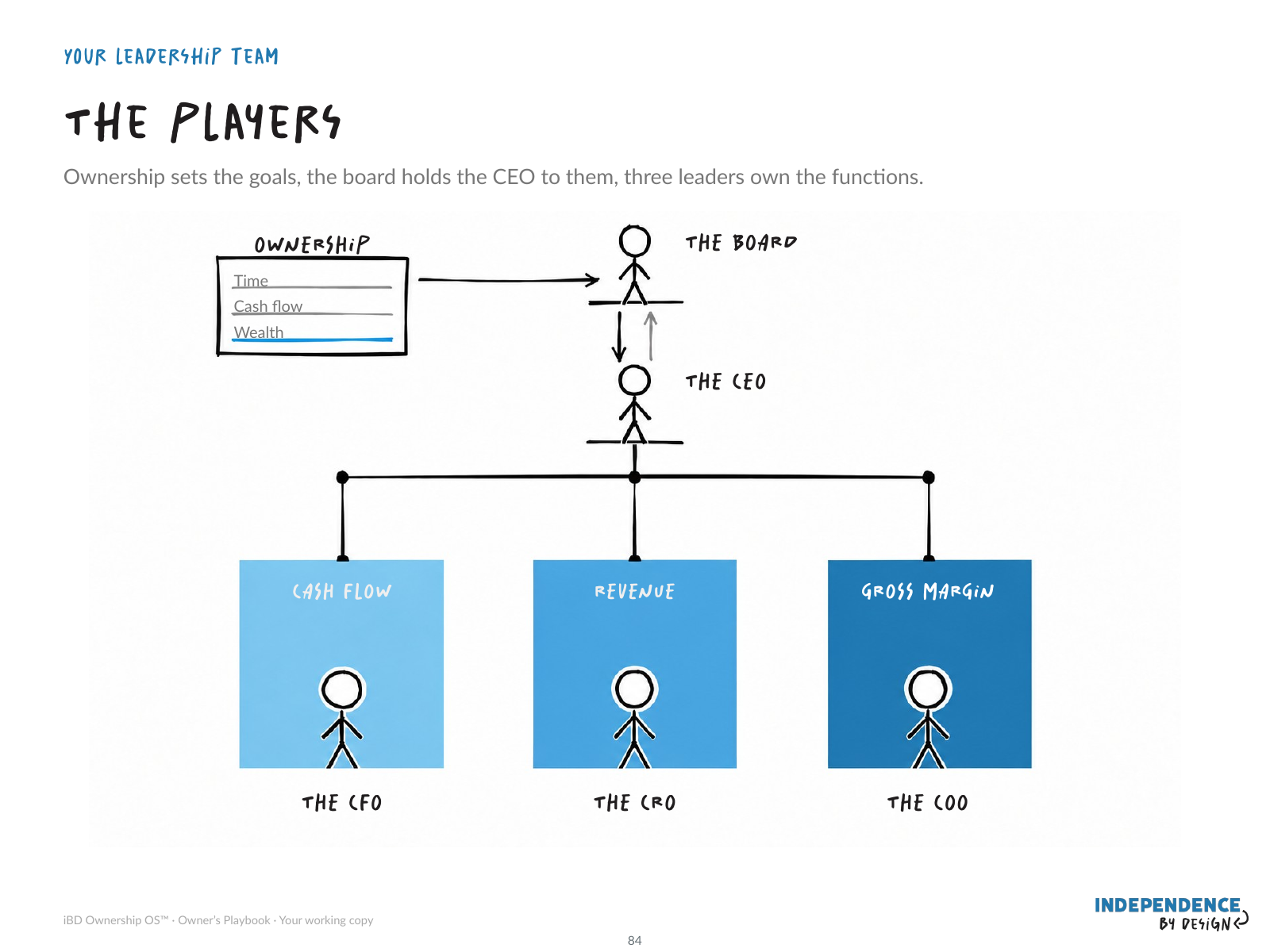
You set the ownership direction. Define who leads finance, revenue and operations, what each person is responsible for, and where you need to build capability. Make the responsibilities you still carry visible.
The CEO brings those functions together around the company plan. You may hold that role today. Your Playbook helps you describe the team you have and the changes needed for the role you want in the future.

CEO
Brings finance, revenue and operations together around the company plan.

CFO
Financial planning, cash flow and reliable numbers.

CRO
Market direction and predictable revenue.
COO
Delivery, margins and operating performance.
One person may carry more than one role today. Make the responsibility clear, then plan how it should develop.
04 / The Rhythm
How will you know whether it's working?
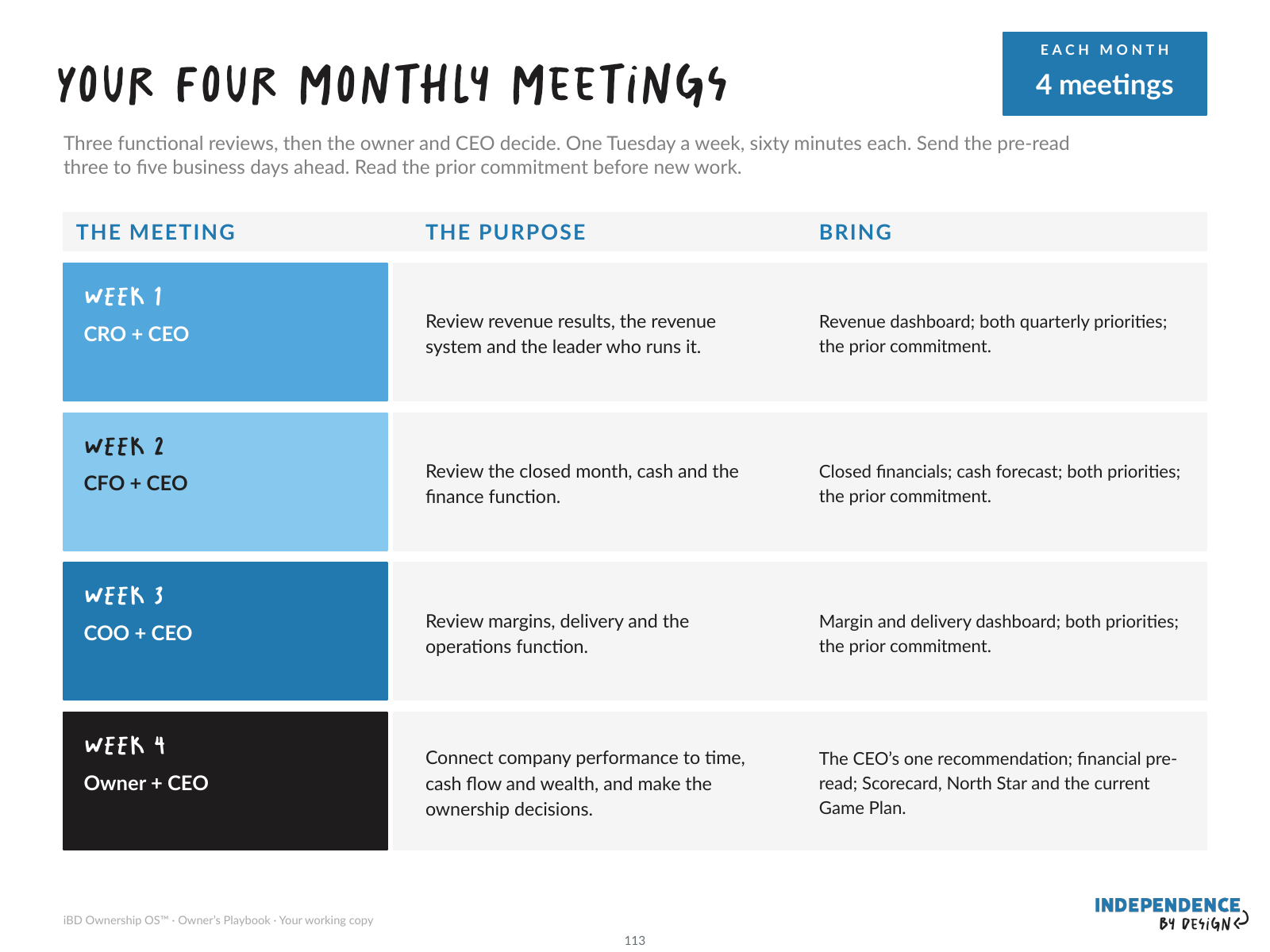
Compare the plan with actual results each month. Choose your next 90 days of work each quarter. Revisit your goals and company plan each year. Keep the decisions, responsibilities and follow-through together so each review builds on the last.
Monthly
Review results and decide.
Review revenue, finance and operations, then connect the company's performance to ownership goals. Record decisions and responsibility for follow-through.
Quarterly
Choose the next work.
Review your ownership goals and milestone scores. Choose the work most limiting progress and name its outcomes, owners and deadlines in your next 90-Day Game Plan.
Annually
Reset direction and plan.
Refresh ownership goals and the company plan. Build and test the next year's budget, then use it in the same reviews.
What you are working toward
Support the life you want without having to run the business every day.
Independence Escape Velocity™ is the moment your business gives you the freedom of time and money, whether you scale, step back or sell. Your time, cash-flow and wealth goals give that independence a specific meaning.
Keep your goals in view.
Compare the hours and responsibilities you carry, the income you take home and your net worth with your ownership goals. You may choose to keep operating, build a leadership team, step back or sell.
Your Velocity Score helps you review the capabilities you are putting in place along the way.
Get your Velocity ScoreStart with your own goals
Begin with what you want from ownership.
You can start by learning the method and working through your time, cash flow and wealth goals. Module 1 includes the two-page Owner's Scorecard, the starting point for your plan.
Already completed the Assessment? Find the milestone you want to work on and use its requirements to guide what you add to your Playbook.
Open Module 1 and the ScorecardBuild your Playbook with support
The Blueprint builds your first usable Playbook.
After your Assessment, the Boardroom Blueprint™ guides you through Modules 1–3: Ownership Goals, Expand Knowledge and Owner’s Playbook. Over three working months, connect your direction, financial picture and first priorities, then learn to use the plan in your monthly, quarterly and annual reviews.
Keep using your Playbook independently afterward, or join The Boardroom for coaching, accountability, the Academy, current tools and AI support as you continue the work.
Explore the Boardroom Blueprint